The week has no natural beginning
A day begins because Earth turns. A month began as a rough way to follow the Moon. A year follows Earth’s orbit around the Sun. But a week is different. Seven days do not come from a visible cycle that resets every Sunday or Monday. The week is a human convention, and conventions can start in different places.
That is why a calendar in the United States often begins with Sunday, a calendar in much of Europe usually begins with Monday, and some countries use Saturday as the first day in local calendar settings. None of those choices is “wrong.” They answer different questions: religious order, work rhythm, civil administration, or software localization.
The confusion comes from treating “the first day of the week” as if it had one universal meaning. It does not. There is the first day in a religious tradition, the first day printed in a wall calendar, the first day of the working week, and the first day used for week numbers. Those can be different.
Why Sunday became first in many calendars
The Sunday-first convention is old and deeply connected to religious and Roman history. In Jewish tradition, the seventh day is the Sabbath, which means the sequence naturally makes Sunday the first day after the day of rest. Christianity inherited a seven-day week from the Jewish world but gave Sunday special importance as the Lord’s Day.
Roman practice also mattered. The Romans adopted a seven-day planetary week alongside older civil cycles, and the day of the Sun became the first day in a widely influential order. Britannica notes that in 321 CE, Emperor Constantine established the seven-day week in the Roman calendar and designated Sunday as the first day, while also making it a day of rest and worship.
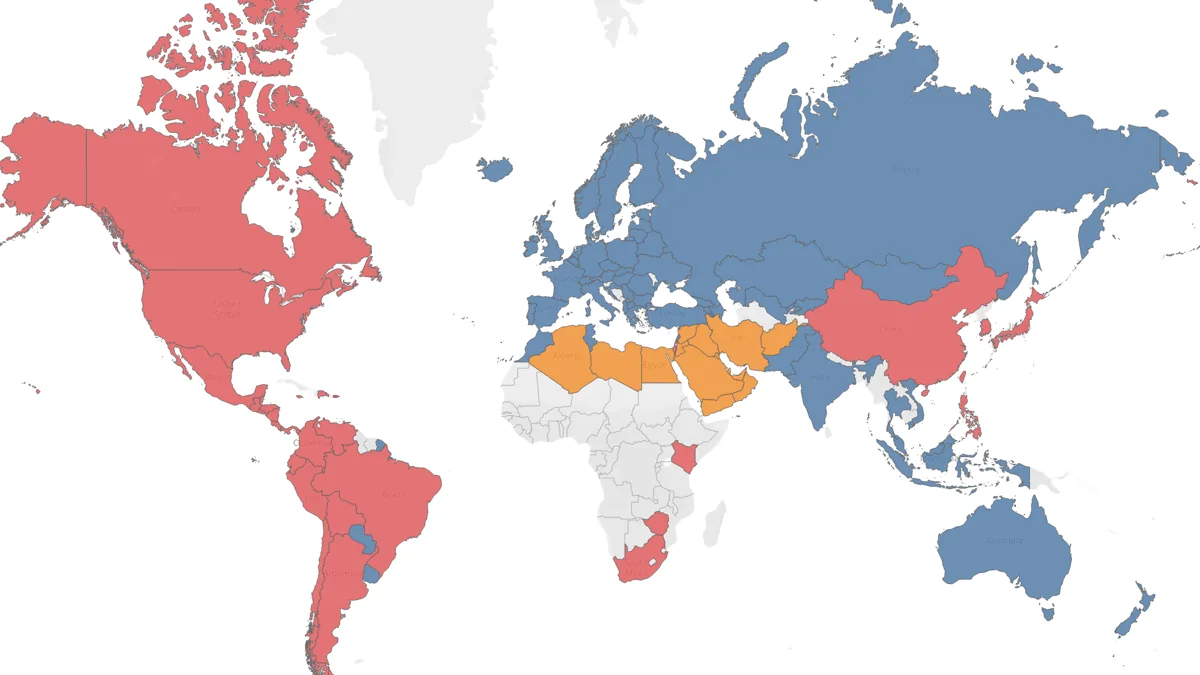
That history helps explain why Sunday-first calendars became normal in the United States, Canada, much of Latin America, Japan, and several other places. The printed calendar grid was not designed only around the workweek. It carried a cultural sequence: Sunday, Monday, Tuesday, Wednesday, Thursday, Friday, Saturday.
Why Monday feels like the real beginning
For many people, Monday feels like the beginning because it is when school, office work, production schedules, and public administration resume after the weekend. Even in countries where wall calendars often start on Sunday, people casually say “next week” while thinking of Monday morning.
This Monday-first habit became stronger as the modern workweek became standardized. Industrial labor, school timetables, government offices, and business reporting all needed a clean weekly block. Monday through Friday became the default working span in many countries, with Saturday and Sunday treated together as the weekend.
That produces a practical argument: if Saturday and Sunday are the weekend, it is easier to display them together at the end of the row. A Monday-first calendar visually matches the way many people plan: five workdays, then two rest days.
ISO 8601 made Monday the standard for week numbers
The most important modern standard is ISO 8601. In the ISO week-date system, Monday is day 1 and Sunday is day 7. Week 1 is not simply the week that contains January 1; it is the week with the year’s first Thursday, or equivalently the first week with at least four days in the new year.
This rule is why ISO week numbers sometimes surprise people. January 1 can belong to the last ISO week of the previous year, and late December can already belong to week 1 of the next ISO year. That looks strange on a casual calendar, but it is useful for business, manufacturing, logistics, payroll, and statistics because every ISO week is a complete Monday-to-Sunday block.
Our week number tool follows that ISO logic. It is not trying to settle every cultural calendar debate. It is answering a narrower question: what is the internationally standardized week number for this date?
Why countries still disagree
Regional settings are not just personal preferences. Operating systems, phones, spreadsheets, and calendar apps use locale data to decide which day appears first. Unicode CLDR, the main data source used by many software platforms, stores week data by territory, including the first day of the week, weekend start and end, and rules for week-of-year calculations.
That is why changing your region from the United States to the United Kingdom, Spain, Germany, or the Netherlands can change the calendar grid from Sunday-first to Monday-first. It is also why some Middle Eastern and North African settings may use Saturday as the first day, matching local workweeks and weekend patterns.
The map above captures that idea: first-day-of-week conventions are regional. They are not a measure of astronomy or correctness. They are cultural defaults encoded into calendars and software.
The hidden difference: display week vs calculation week
A calendar can display Sunday first while still using ISO-style week numbers. That combination is where many mistakes begin. If a Sunday-first calendar shows a week number on the left edge, users may assume the row is the numbered week. But ISO weeks begin on Monday, so Sunday belongs to the end of the previous ISO week.
This matters in business reports. A retail dashboard, payroll period, school timetable, or manufacturing plan can be off by a week if one system uses Sunday-start weeks and another uses ISO weeks. The dates are the same, but the weekly buckets are different.
When precision matters, write the rule explicitly: “weeks start Monday, ISO 8601” or “US calendar weeks, Sunday through Saturday.” That one sentence prevents a surprising amount of confusion.
So which day really starts the week?
The honest answer is: it depends on the system. In ISO week numbering, Monday starts the week. In many religious and printed-calendar traditions, Sunday starts the week. In some regional software settings, Saturday may be first. In your workplace, the week might start on whatever day payroll, shifts, or reporting periods require.
For everyday planning, choose the display that matches how you think. For international work, Monday-first ISO logic is usually safer because it matches week numbers and keeps the weekend together. For public-facing tools, the best answer is to respect the user’s locale or let the user choose.
The week is not a law of nature. It is a social agreement. Sunday-first and Monday-first calendars are two surviving answers to the same old question: when should we draw the line around seven days and call it a new week?